NeurIPS 2026 workshop proposal

1st Workshop on Physical World AI

Beyond pixels: understanding the physical world through geometry, characteristics, and multimodal sensing.

PhysWorldAI

Physical World AI: Geometry, Characteristics, and Multimodal Sensing

PhysWorldAI is the proposed first workshop on physical world AI, centered on the question of how AI systems can perceive, represent, and reason about the physical world beyond appearance.

The final proposal organizes the program around three coupled pillars: physical geometry, physical characteristics, and physical sensors. It brings together computer vision, robotics, graphics, multimodal learning, haptics, audio, and physics-based simulation communities before benchmarks and protocols fragment across separate venues.

The requested format is a half-day workshop with moderated Q&A, contributed-paper spotlights, posters, live demos, and a synthesis panel across geometry, characteristics, sensing, and embodied AI.

Half day

Workshop format

200-300 attendees

Expected attendance

20 poster boards

Poster capacity

Atlanta, Paris, Sydney

Venue preferences

Topics

Geometry, characteristics, sensors, and cross-cutting physical AI

Physical Geometry

3D/4D reconstruction, articulated and deformable scene understanding, geometry-aware world models, and physically grounded view synthesis.

Physical Characteristics

Material and physical property estimation, mass, friction, stiffness, elasticity, deformability, affordances, contact-rich interaction, differentiable simulation, and generative models of physical dynamics.

Physical Sensors

Multimodal sensing and fusion with tactile, force/torque, proprioceptive, RF, audio, depth, IMU, and event-based signals.

Cross-cutting

Embodied world models, robot manipulation, sim-to-real transfer, multimodal simulators, benchmarks, datasets, evaluation protocols, and responsible deployment.

Half-Day Program

Preliminary schedule from the final proposal

Introduction and Opening Remarks

Invited Talk 1 + Q&A

Geometry

Invited Talk 2 + Q&A

Characteristics

Coffee Break

Invited Talk 3 + Q&A

Sensors

Invited Talk 4 + Q&A

Cross-cutting

Contributed Paper Spotlights

Posters + Live Demos

Synthesis Panel + Closing Remarks

Key Dates

Submission timeline in the final proposal

Submission deadline August 29, 2026
Notification September 26, 2026
Camera-ready October 26, 2026

Invited Speaker Plan

Four planned invited speakers from the final proposal

Anima Anandkumar
Physical simulation and world models

Anima Anandkumar

Caltech

Bren Professor of Computing and Mathematical Sciences

Noah Snavely
Physical geometry

Noah Snavely

Cornell University / Cornell Tech / Google DeepMind

Professor of Computer Science

Chelsea Finn
Embodied intelligence

Chelsea Finn

Stanford University

Assistant Professor in Computer Science and Electrical Engineering

William T. Freeman
Cross-cutting physical signals

William T. Freeman

Massachusetts Institute of Technology

Thomas and Gerd Perkins Professor of EECS

Organizers

Eight-organizer team listed in the final proposal
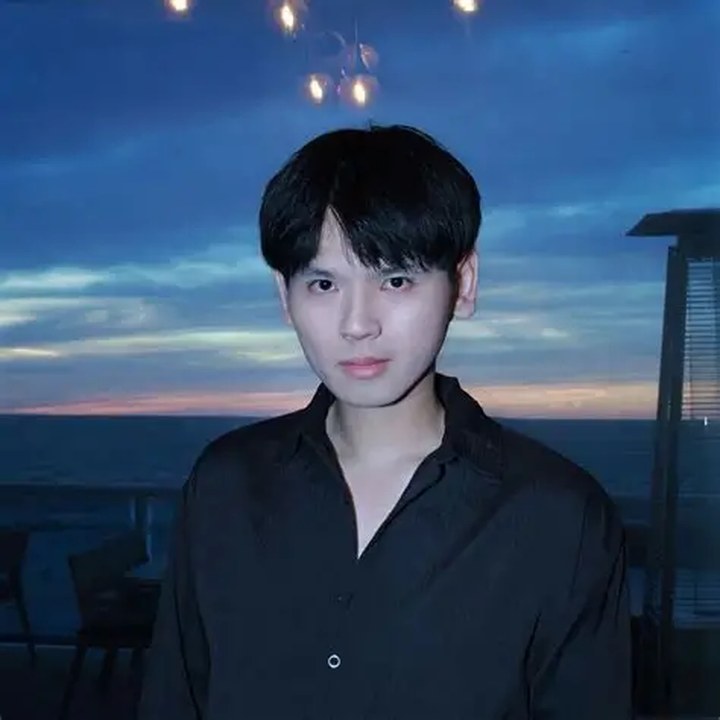
Kaichen Zhou
Lead organizer

Kaichen Zhou

Massachusetts Institute of Technology / Harvard University

Physical world AI, 3D/4D vision, multimodal sensing, embodied intelligence, and robotic world models.

Ruojin Cai
Organizer

Ruojin Cai

Harvard University

3D computer vision, spatial intelligence, and world models grounded in the real world.

Jianqing Zheng
Organizer

Jianqing Zheng

University of Oxford

3D/4D reconstruction, deformation modelling, multimodal sensor fusion, and surgical robotics.

Congyue Deng
Organizer

Congyue Deng

Massachusetts Institute of Technology

3D computer vision, geometric deep learning, and physical representation learning.

Amir Jamaludin
Organizer

Amir Jamaludin

University of Oxford

Multimodal learning, foundation models, medical image understanding, and large-scale biomedical datasets.

Yining Hong
Organizer

Yining Hong

Stanford University

Computer vision, multimodal learning, physical and commonsense reasoning, and embodied agents.

Shangzhe Wu
Organizer

Shangzhe Wu

University of Cambridge

3D computer vision, inverse graphics, dynamic 3D world modeling, and multimodal observations.

Mengyu Wang
Organizer

Mengyu Wang

Harvard Medical School

Generative AI, multimodal models, AI for robotics, AI for genomics, and medical AI applications.

Sponsors

Confirmed sponsor commitments in the final proposal

Contact

general_world@outlook.com

Questions, sponsorship, program committee interest, or proposal coordination.